

Do Dogs Actually Like Wearing Clothes?
This site spent a decade celebrating the best-dressed dog in history, so you might expect a breathless yes. Here is the honest answer to whether dogs like wearing clothes: some dogs genuinely enjoy clothes, many tolerate them politely, and some hate every second. Knowing which dog you have matters more than how cute the sweater is.

Do dogs like clothes? The direct answer
Some dogs enjoy clothes, most tolerate them, and some hate every second. Dogs do not care about fashion; they care about comfort, warmth, and your attention, so a dog likes clothes when the garment fits, nothing pinches or rides up, and wearing it comes bundled with praise and treats.
A dog dislikes clothes when the garment restricts movement, overheats them, or arrived with zero introduction. Most dogs land in the middle: they tolerate clothes fine, and the joy in the photos is mostly ours.

How to tell which one yours is
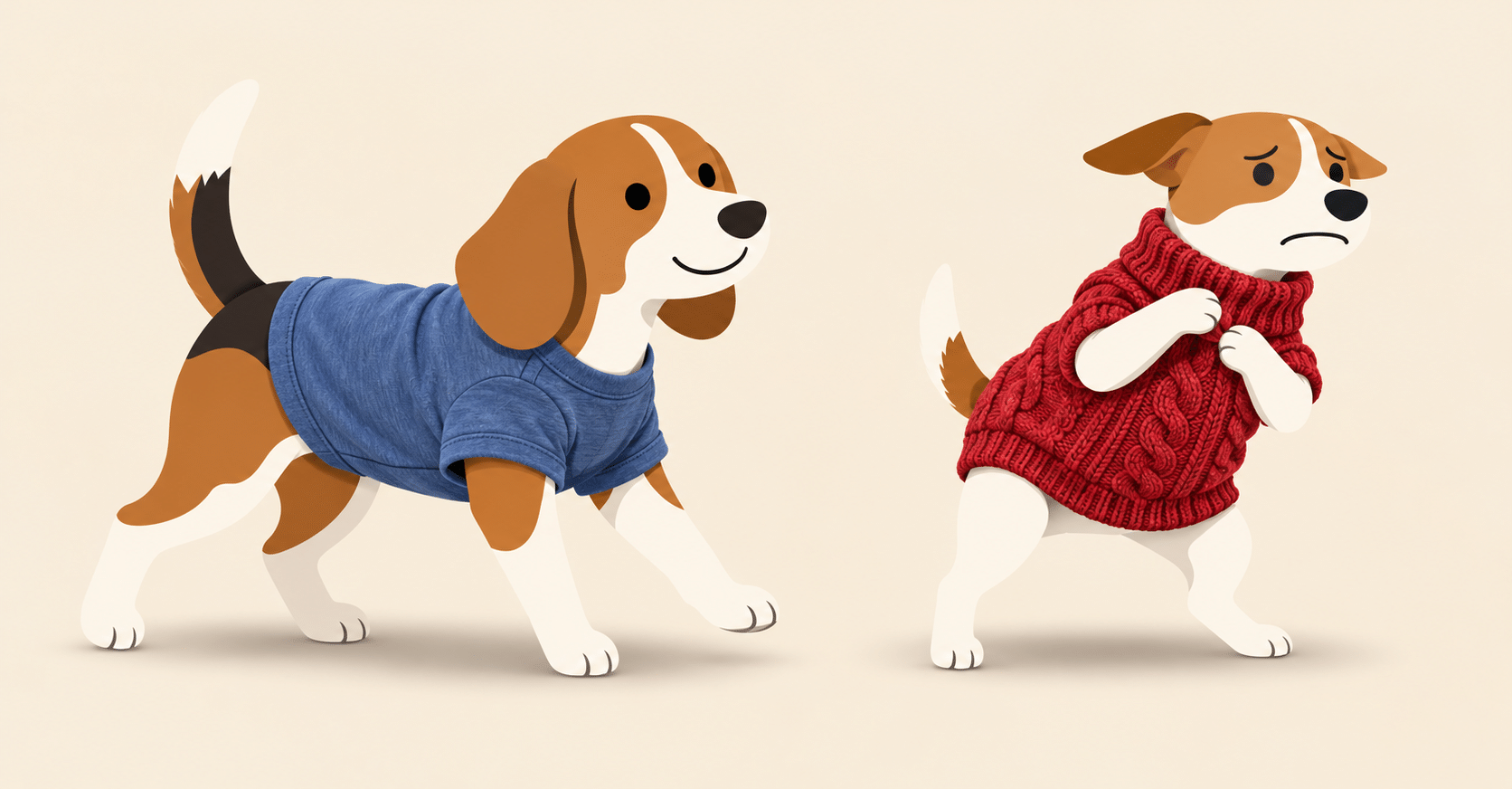
Signs your dog is fine with it: normal walking and playing within a minute or two, normal tail position, taking treats, forgetting the garment exists.
Signs your dog is uncomfortable in clothes: freezing in place (“mannequin mode”), refusing to walk, pawing or biting at the garment, shaking, pinned ears, or the whale-eye sideways look. A dog doing statue impressions in a hot dog costume is not being funny; it is being miserable in a way the internet has historically found funny. Take it off, go slower, or accept a bandana-level compromise.
Each signal means something slightly different, and the response is different too:
- Freezing or refusing to walk usually means the garment feels like a trap. Take it off, and next time put it on for a few seconds in the living room, not at the door before a walk.
- Pawing, biting, or rolling points at a specific spot: a seam under the armpit, a hood touching the ears, a tag at the neck. Find the spot before you blame the dog.
- Shaking it off, over and over is the dog trying to remove it. Too soon, too much, or the wrong size.
- Pinned ears, whale eye, a tucked tail are stress signals, not fashion opinions. Stop the session and go back a step.
- Panting, seeking cold floors, or slowing down on a walk means too warm. Lighter garment, or none.
- Normal within two minutes is the pass mark. A dog that walks, sniffs, plays, and takes treats as usual has told you it is fine.
Should dogs wear clothes?
Only when the clothing does a job the dog cannot do for itself. It is ok to put clothes on a dog that tolerates them, but if the garment does none of the jobs below, the clothes are for the humans, and the dog’s tolerance decides.
Warmth. Small, short-coated, senior, and clipped dogs lose heat fast, and a sweater on a cold walk is functional gear, not decoration. Which dogs need a layer, which layer, and how to size it is on winter clothes for small dogs.
Rain. A hooded raincoat keeps a short or clipped coat from soaking through, and keeps the wet-dog smell out of your house. For a dog that hates hoods, a coat with a high collar does most of the job.
Paws. Boots protect pads from hot pavement, road salt, and rough ground, which is exactly why Boo wore his Pawz boots on rainy San Francisco days. Boots are the hardest garment to get a dog used to; the general method is in the section below, the boot-specific version is on the winter page.
Sun. Thin-coated, white, and freshly clipped dogs can burn on the back. A lightweight sun shirt on a beach day is clothing with a purpose, and it comes off in the shade.
Recovery. After surgery, a soft recovery shirt that covers the site is the common alternative to the cone, and many dogs tolerate a shirt better than a collar they cannot see past. Ask your vet which one suits the specific wound.
Calm. Some owners use a snug anxiety wrap during fireworks or storms. Results vary a lot from dog to dog; it costs little to try on a nervous dog and is not a substitute for anything your vet suggests.
A harness is not clothing, and a dog that dislikes clothes often wears a harness without complaint, because it does not cover the body. If the goal is control on walks rather than warmth, buy the harness.
Boo is actually the perfect case study for the honest version of this. His famous short haircut removed most of his natural insulation, so his wardrobe was partly functional from day one. He was also introduced to clothes young, gradually, and with an owner paying close attention. That is the formula.
How to get a dog used to wearing clothes
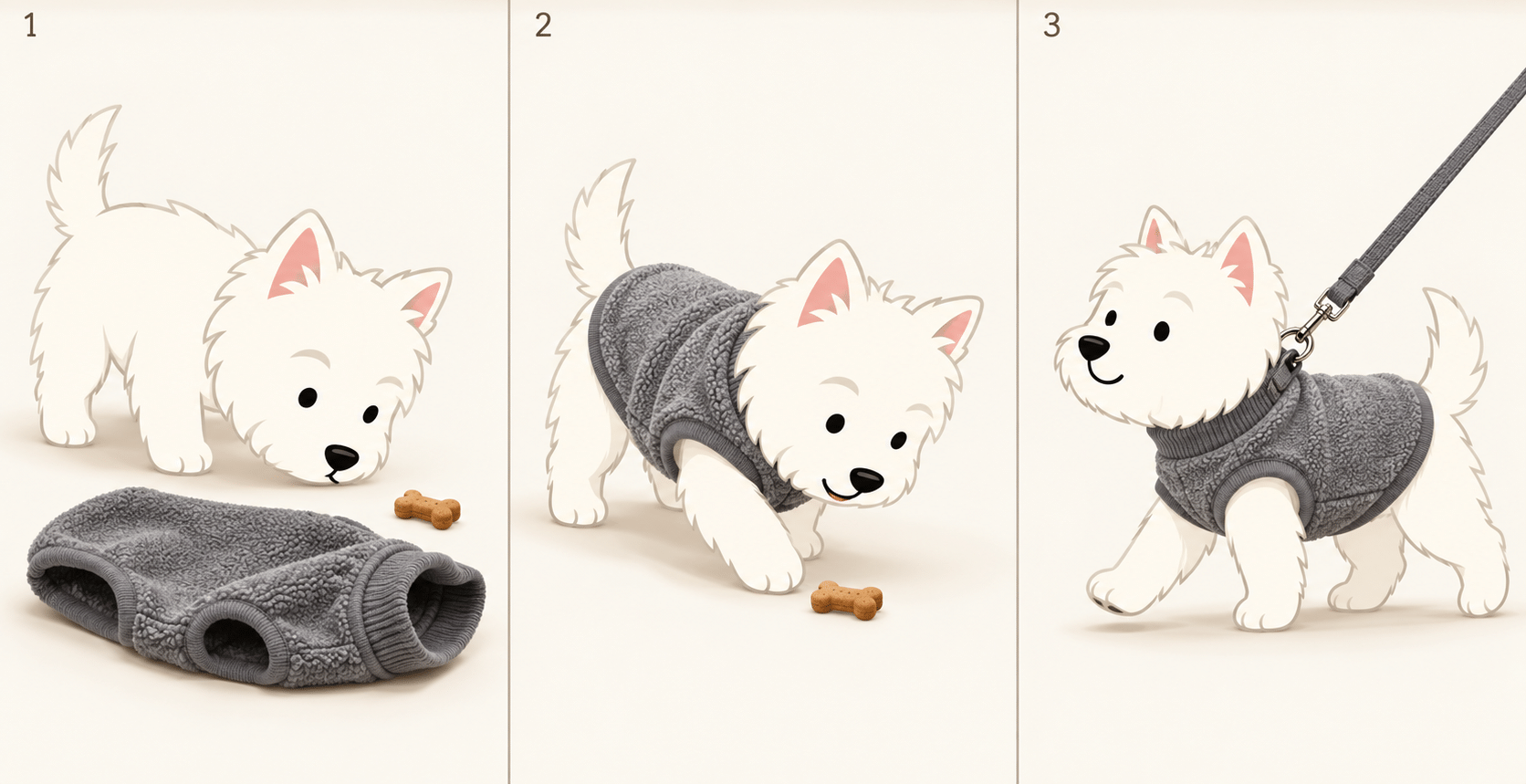
Indoors, in seconds, with treats, over about five days: drape the garment on and take it off, then fasten it for a minute, then a short walk with it put on in the hallway rather than at the door. It works on an adult dog as well as a puppy; it just takes a few more days.
Day one, indoors, seconds. Lay the garment on the floor and let the dog sniff it. Drape it over the dog’s back without fastening anything, give a treat, take it off. That is the whole session. Do it twice more during the day.
Days two and three, fastened, a minute. Put it on properly, treat, walk a few steps around the room, treat, take it off before the dog is bothered. The garment comes off while the dog is still calm, every time; a dog that only ever gets it off by struggling learns that struggling works.
Days four and five, the walk. Put it on in the hallway, not at the door, so the garment is not the thing standing between the dog and going outside. Short walk, normal praise. If the dog forgets it is wearing anything within two minutes, you are done.
Any day it goes wrong, go back one step and stay there for a day. Never force a garment over the head of a dog that is backing away; that is the memory that makes the next ten attempts fail.
Start with the lightest, simplest piece you own, a tee or a bandana, before a hood or a costume. Boots are the slowest of all and get their own version of this, one paw at a time, in the boots section of the winter clothes page.
The comfort rules, whatever the garment
Nothing over the face or eyes. Ears free, or inside a hood that does not pin them. Legs and tail free to move; a dog should be able to sit, lie down, and go to the bathroom without fabric in the way. Check the armpits and the neck for rubbing after the first wear. No ribbon, buttons, or small parts a dog can chew off. Skip clothes entirely in warm weather unless the item is sun or rain protection. And let the dog vote: if every session is a struggle, your dog has answered the question in the title, and that answer deserves respect.
Size by measuring, never by guessing. The three measurements and how to take them are on the winter clothes page, which also covers which dogs need a coat at all.
Boo made 16 million people smile in a tiny hoodie. But the reason it worked, the reason all of it worked, is that underneath the wardrobe he was a comfortable, secure, well-loved dog. Get that part right and the outfits are a bonus, whichever day of the week it is.
If the question is really about one holiday, the holiday pages (all of them on the Holidays hub) apply this same test to actual outfits: Halloween costumes, Thanksgiving outfits, and Christmas outfits for small dogs.
Gentle starter pieces
Lightweight starter tee →Soft dog sweater →
Affiliate links: this site earns a small commission at no cost to you.
Frequently Asked Questions
Do dogs like wearing clothes?
Some do, most tolerate them, and some clearly hate it. A dog that walks, plays, and takes treats normally in clothes is fine; a dog that freezes, paws at the garment, or refuses to move is telling you no.
Should dogs wear clothes?
Only when the clothing does a job: warmth for a small, short-coated, senior, or clipped dog, rain or paw protection, or a recovery shirt after surgery. For a dog that needs none of those, the clothes are for the humans, and the dog’s tolerance decides.
How do I get my dog used to wearing clothes?
Indoors, in seconds, with treats: drape the garment on the dog and take it off, then fasten it for a minute the next day, then a short walk with it put on in the hallway rather than at the door. Take it off while the dog is still calm every time, and go back a step on any bad day. Start with a tee or bandana; hoods and costumes come later.
Did Boo the dog like wearing clothes?
By all accounts Boo tolerated clothes unusually well. He was introduced to them young and gradually, and his short haircut meant lightweight clothes also served a practical warmth function.