

Hachiko: The True Story of the World’s Most Loyal Dog
Before the internet crowned its famous dogs, the world already had one, and his standard has never been beaten. Hachiko was an Akita who waited at a Tokyo train station for his owner every day for nine years. The owner had died. Hachiko waited anyway.
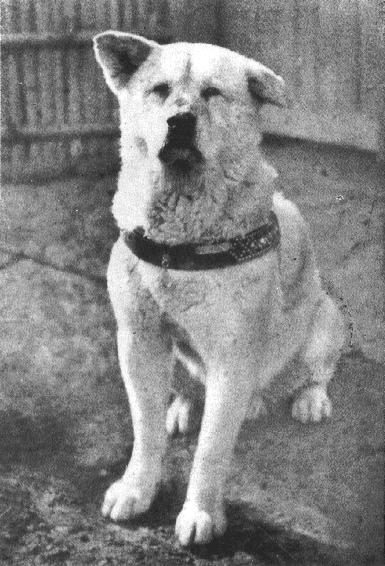
The story
Hachiko was born in 1923 and belonged to Hidesaburo Ueno, a professor at Tokyo Imperial University. Their routine was simple and perfect: every morning Ueno walked to Shibuya Station, and every afternoon Hachiko trotted down to meet his train.
In May 1925, Ueno suffered a fatal hemorrhage at work and never came home. Hachiko was not yet two years old.
He kept going to the station. Not for a week, not for a season: for nine years, nine months, and fifteen days, appearing at the station when the afternoon train came in, scanning the commuters for one face.
The station did not love him at first. Staff and street vendors treated him as a stray underfoot, and the early years of the vigil were lean ones. What changed everything was a 1932 article in the Asahi Shimbun, one of Japan’s biggest newspapers, telling the story of the dog who was still waiting seven years after his master’s death. Japan fell for him completely. The same yakitori vendors who had once shooed him away now fed him daily, commuters greeted him by name, and people began traveling to Shibuya just to see him take up his post. His name even entered the culture as shorthand: to be a “Hachiko” is to be faithfully, stubbornly devoted.
By then he was an old dog, arthritic and heartworm-ridden, and he waited anyway. Hachiko died on March 8, 1935, on a street near the station where he had spent his whole vigil. Japan mourned him like a public figure, because by then he was one. His body lay in state at the station, surrounded by mourners, before being preserved; he rests today at Tokyo’s National Museum of Nature and Science, still visited, still loved.
One more detail, because this site cares about the true versions of stories: for decades a legend claimed Hachiko only came for the food, pointing to the yakitori skewers found in his stomach. In 2011, scientists re-examined his remains and settled it. The skewers had nothing to do with his death (cancer and infection did), and no amount of yakitori explains the seven unfed years before the newspaper made him famous. He came for Ueno. The science says so now, officially.
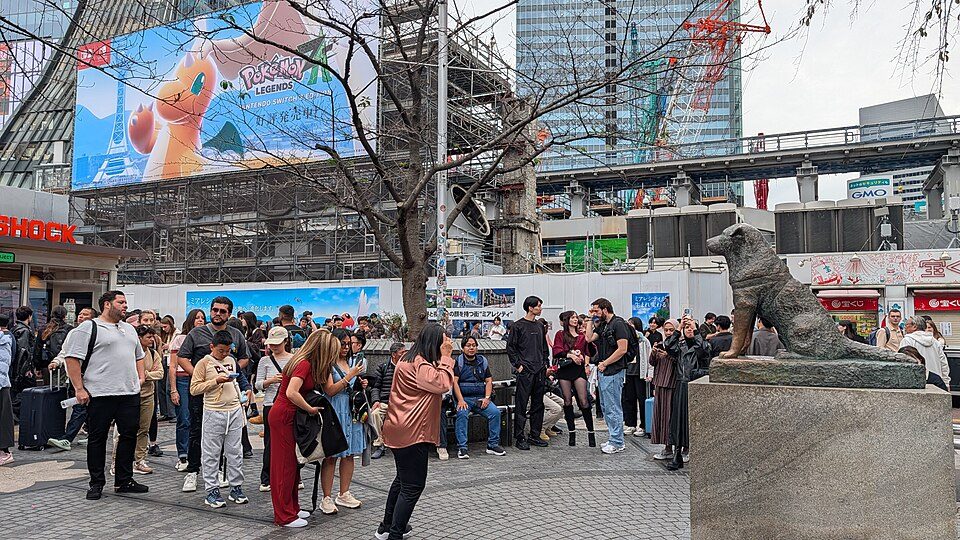
The statue
Here is the detail that gets everyone: the bronze statue of Hachiko at Shibuya Station went up in 1934, while he was still alive. Hachiko attended his own memorial’s unveiling.
Even the statue has a story of loyalty and loss. During World War II the original bronze was melted down for the metal, and Japan simply refused to let that be the end: in 1948 the sculptor’s son recast it, and that second statue is the one standing today at the “Hachiko exit” of one of the busiest train stations on earth. It is among Tokyo’s most beloved meeting points, permanently surrounded by people waiting for someone, which is the most fitting tribute imaginable. An annual remembrance ceremony still gathers there every April 8.
And in 2015, eighty years after his death, the University of Tokyo unveiled one more statue on the campus where Ueno taught: Hachiko, up on his hind legs, greeting a returning professor at last. It took Japan eight decades to give the story the ending it deserved, and if you can look at a photo of that statue without feeling something, this may not be the website for you.
Why he belongs here
This site mostly remembers the famous dogs of the internet age, and every one of them, Boo included, inherited something from Hachiko: the proof that a dog’s devotion can move an entire culture. Boo was loved for joy; Hachiko is loved for something heavier and older. Ninety years on, strangers still leave flowers for a dog who simply refused to stop showing up.
The internet did not invent loving a dog it never met. Hachiko did.
Frequently Asked Questions
Is the Hachiko story true?
Yes. Hachiko was a real Akita who waited at Shibuya Station for over nine years after his owner, Professor Hidesaburo Ueno, died in 1925. Contemporary newspapers documented him, and he attended the 1934 unveiling of his own statue.
How long did Hachiko wait?
Nine years, nine months, and fifteen days, from his owner’s death in May 1925 until his own death on March 8, 1935.
Where is the Hachiko statue?
Outside Shibuya Station in Tokyo, at the exit named after him. It is one of the city’s most famous meeting points.