

What Happened to Laika, the First Dog in Space?
Laika was a small stray from the streets of Moscow who became the first living creature to orbit the Earth. She launched aboard Sputnik 2 on November 3, 1957, and she did not come back. There was never a plan for her to come back. This page tells her story honestly, because she has earned at least that.
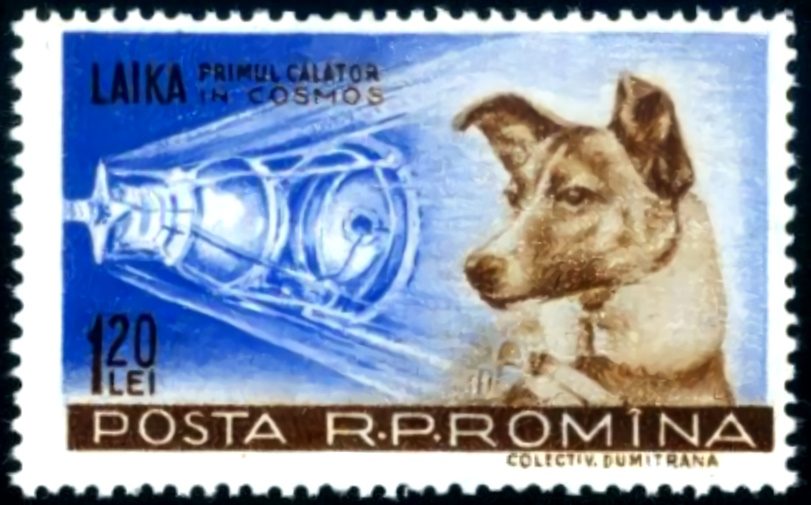
From the streets to the stars
The Soviet space program recruited its first cosmonaut candidates from Moscow’s strays, reasoning that street dogs were already tough, adaptable, and used to cold and hunger. Laika, a calm, small mixed-breed of about thirteen pounds, was chosen for the mission that would answer one question: could a living being survive orbit? Her handlers actually knew her as Kudryavka, “Little Curly.” The world got the name Laika, “Barker,” and it stuck.
Her training was as grim as it was practical: progressively smaller cages to acclimate her to the capsule, centrifuges, feeding gel. And the mission itself was a rush job in the most literal sense. After Sputnik 1 stunned the world in October 1957, the follow-up was ordered on a propaganda deadline, ready in roughly four weeks to mark the anniversary of the revolution. That deadline, not engineering necessity, is why there was no plan to bring her home. It is the detail that turns the story from sad to unjust, and it deserves to be said plainly.
The people closest to her knew it. Days before launch, one of the mission scientists, Vladimir Yazdovsky, took Laika home to play with his children. His explanation, recorded later, is one of the saddest sentences in the history of spaceflight: he wanted to do something nice for her, because she had so little time left.
And still: she did the thing. Laika reached orbit alive, proving spaceflight was survivable and directly paving the way for every human who followed. Yuri Gagarin flew less than four years later on the trail one small street dog opened.
The truth about her death
For decades, the official account said Laika survived several days and was painlessly euthanized before her oxygen ran out. In 2002, a scientist who worked on the mission revealed the truth: Laika died within hours of launch, from overheating, when the capsule’s thermal control failed. There was never re-entry technology in 1957; everyone involved knew the flight was one-way.
One of the mission scientists, Oleg Gazenko, said it plainly decades later: the mission did not teach enough to justify the death of the dog, and he regretted it. Even the people who sent her came to wish they had not.
Her capsule stayed up long after she was gone, circling the planet more than two thousand times before burning up on re-entry in April 1958. For five months, anyone who looked up at the right moment was looking at the first space traveler’s funeral procession.
How she is remembered
Laika became one of the most famous animals in history: stamps, songs, books, and finally, in 2008, a monument in Moscow near the military research facility where she trained, a small dog standing on a rocket shaped like a cupped hand. She is the only dog on this site who was famous to the entire planet before television was even common.
This site remembers dogs who were loved: Boo, who had 16 million fans, and Hachiko, who had a nation. Laika had handlers who, knowing what was coming, took her home to play with their children in her final days, because they wanted her to be a dog for a little while first. She belongs with the famous dogs not because her story is happy, but because sixty-plus years later, the whole world still refuses to forget one small stray from Moscow.
Frequently Asked Questions
Did Laika survive her space flight?
No. Laika died within hours of launch on November 3, 1957, from overheating when the capsule’s thermal systems failed. The truth was only revealed in 2002; for decades the official account claimed she survived days longer.
Was Laika's flight ever meant to return?
No. Re-entry technology did not exist in 1957, and the mission was planned as one-way from the start.
Why was a street dog chosen for the mission?
Soviet scientists recruited Moscow strays because they were already hardy and adaptable. Laika was selected for her small size and calm temperament.